Inflammation May Cause Depression, Scientists Say

BY EMI BOSCAMP, MBG EDITORIAL
JANUARY 5, 2015 5:00 AM EST

Depression needs to be treated like a physical illness — not a mental disability. With “mental disability” comes a stigma of weakness. So it’s understandably something people have trouble admitting they have. But would people be less ashamed of their depression if it was regarded as a bodily condition? Because that’s exactly what it is, according to a growing number of scientists.

George Slavich, a clinical psychologist at the University of California in Los Angeles told the Guardian, “I don’t even talk about it as a psychiatric condition any more. It does involve psychology, but it also involves equal parts of biology and physical health.”

In other words, depression has just as much to do with the body as it does with the mind.

It seems kind of obvious once pointed out, but when people are sick, they show classic signs of depression: lethargy, apathy, and an inability to get one’s self off of the couch. So could there be a common cause for both depression and feeling physically ill? Recent research says yes. It’s inflammation.

Research has shown that healthy people can be temporarily put into a depressed, anxious state when given a vaccine that causes a spike in inflammation. A family of proteins called cytokines sets off inflammation in the body, and shifts the brain into sickness mode.

Both cytokines and inflammation have been shown to rocket during depressive episodes and to drop off in periods of remission in bipolar people.

Another researcher Turhan Canli of Stony Brook University in New York believes infections are the most probable culprit behind inflammation, going as far as to say that we should rebrand depression as an infectious — but not contagious — disease.

However, infection is not the only way to incite inflammation. A diet rich in trans fats and sugar has been shown to promote inflammation, and obesity is another risk factor because body fat, particularly around the belly, stores large quantities of cytokines.

It seems like depression is some sort of allergic reaction to our own lifestyles. Stress, especially the kind induced by social rejection or loneliness, also causes inflammation. We’re literally eating, drinking, and isolating ourselves into inflammatory — and therefore depressive — states.

There is hope, though. We can change our diets to reduce this inflammation (though we shouldn’t rid ourselves of it entirely because our immune system needs it to fight off infections). Plus, the clinical trials conducted so far have found that adding anti-inflammatory medicines to antidepressants not only improves symptoms, it also increases the proportion of people who respond to treatment, but more research needs to be done on this.

Carmine Pariante, a psychiatrist at Kings College London, said that in between five to 10 years there may be a blood test that can measure inflammation in people with depression so that they can be treated accordingly.

Maybe it would help, too, if people didn’t look down on those suffering from depression, if people could have a little more sympathy for others. Inflammation is a condition that rears its ugly head in every person at a given time. If depression could be thought of as something as common and inevitable as inflammation, maybe we’d all be more understanding.
Learn More

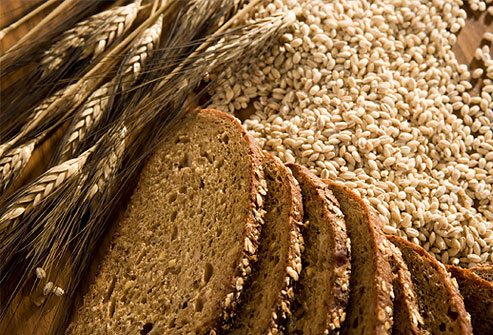
Why Grains Are Unhealthy

wholegrainsBY: MARK SISSON

I find that grain bashing makes for a tasty, but ultimately unsatisfying meal.

You all know how much I love doing it, though. But no matter how often I sit down to dine on the stuff (and I’ve done it with great gusto in the past), I always leave the table feeling like I left something behind. Like maybe I wasn’t harsh enough about the danger of gluten, or I failed to really convey just how much I hated lectins. If I didn’t know better, I’d think the mere mention of grains was eliciting a crazy insulin-esque response and throwing my satiety hormones all out of whack. I was filling up on anti-grain talk, but I just couldn’t fill that void for long.

Well, I’ve got the hunger today, and this time I aim to stuff myself to the point of perpetual sickness. I don’t ever want to have to look at another anti-grain argument again (yeah, right). If things get a little disjointed, or if I descend into bullet points and sentence fragments, it’s only because the hunger has taken over and I’ve decided to dispense with the pleasantries in order to lay it all out at once.

So please, bear with me.

Apart from maintaining social conventions in certain situations and obtaining cheap sugar calories, there is absolutely no reason to eat grains. Believe me – I’ve searched far and wide and asked everyone I can for just one good reason to eat cereal grains, but no one can do it. They may have answers, but they just aren’t good enough. For fun, though, let’s see take a look at some of the assertions:

“You need the fiber!”

Okay, for one: no, I don’t. If you’re referring to its oft-touted ability to move things along in the inner sanctum, fiber has some unintended consequences. A few years back, scientists found that high-fiber foods “bang up against the cells lining the gastrointestinal tract, rupturing their outer covering” which “increases the level of lubricating mucus.” Err, that sounds positively awful. Banging and tearing? Rupturing? These are not the words I like to hear. But wait! The study’s authors say, “It’s a good thing.” Fantastic! So when all those sticks and twigs rub up against my fleshy interior and literally rupture my intestinal lining, I’ve got nothing to worry about. It’s all part of the plan, right?

Somehow, I’m not convinced that a massive daily infusion of insoluble grain fiber is all that essential. And that “lubricating mucus” sounds an awful like the mucus people with irritable bowel syndrome complain about. From personal experience I can tell you that once I completed my exodus from grains, the IBS completely stopped. If you’re not yet convinced on the fiber issue I’ll refer you to Konstantin Monastyrsky’s Fiber Menace. Anyway, there’s plenty of fiber in the vegetables and fruit I eat. Which takes me to the next claim:

“You need the vitamins and minerals!”

You got me. I do need vitamins and minerals, like B1 and B2, magnesium and iron, zinc and potassium. But do I need to obtain them by eating a carb-heavy, bulky grain? No, no I don’t. You show me a serving of “healthy whole grains” that can compete – nutrient, vitamin, and mineral-wise – with a Big Ass Salad. What’s that? Can’t do it? Thought so.

“But it forms the foundation of the governmental food pyramid!”

You know, I should have just started the entire post with this one. I could have saved my fingers the trouble of typing and your eyes the trouble of reading. Governmental endorsements are not points in your favor, grain-eater; they are strikes against you. An appeal to authority (unless that “authority” is actually a preponderance of scientific evidence, of course) does not an effective argument make. Conventional Wisdom requires consistent, steady dissection and criticism if it is to be of any value.

There’s a reason grains are first and foremost on the list of foods to avoid when following the Primal Blueprint: they are completely and utterly pointless in the context of a healthy diet. In fact, if your average unhealthy person were to ask for the top three things to avoid in order to get healthy, I would tell them to stop smoking, to stop drinking their calories (as soda or juice), and to stop eating grains. Period. Full stop. They really are that bad.

I’ve mentioned this time and again, but the fundamental problem with grains is that they are a distinctly Neolithic food that the human animal has yet to adapt to consuming. In fact, cereal grains figured prominently in the commencement of the New Stone Age; grains were right there on the forefront of the agricultural revolution. Hell, they were the agricultural revolution – einkorn wheat, emmer, millet, and spelt formed the backbone of Neolithic farming. They could be stored for months at a time, they were easy enough to grow in massive enough quantities to support a burgeoning population, and they promoted the construction of permanent settlements. Oh, and they were easily hoarded, meaning they were probably an early form of currency (and, by extension, a potential source of income inequality). And here’s the kicker: they were harsh, tough things that probably didn’t even taste very good. It also took a ton of work just to make them edible, thanks to their toxic anti-nutrients.

Read more: http://www.marksdailyapple.com/why-grains-are-unhealthy/#ixzz3O45XXKNn